
Falsekaiba
- Fan scanlator
- Amateur typesetter
- Internet Denizen



THE iDOLM@STER: Shiny Colors - Jimuteki Shinography
- Translation editing
- Lettering, SFX
- Redraws

Fire Emblem: Fortune's Weave
- Translation
- Lettering, SFX
- Redraws
Persona 4 (2008) Revist: Part 1
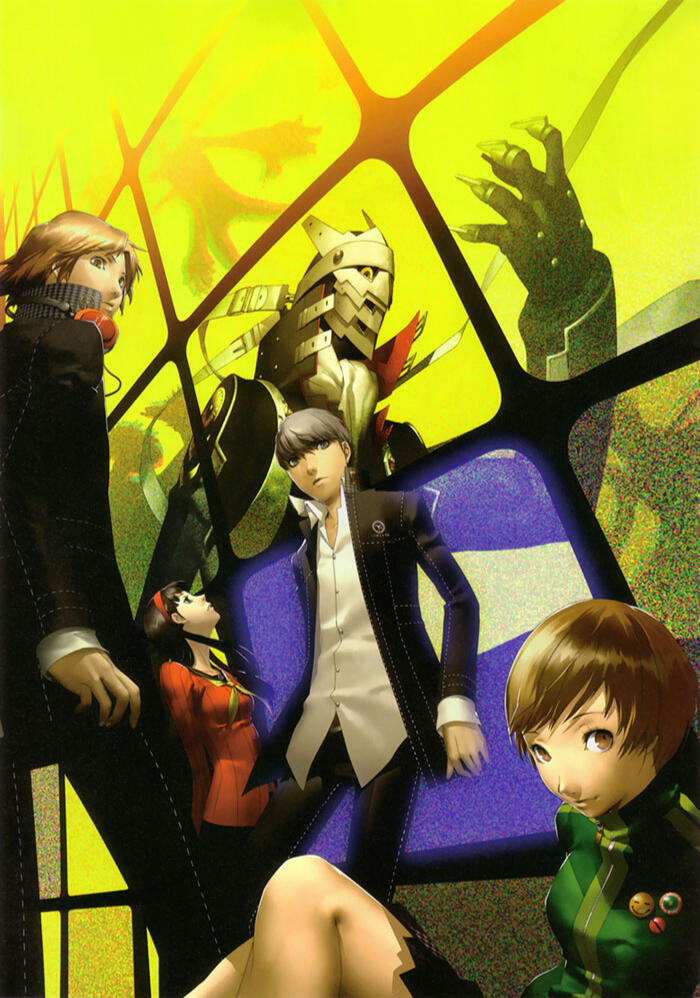
Persona 4 is an evergreen video game that needs no introduction, but it's become even more relevant lately as it's remake, Persona 4 Revival, is set to release in a little over 6 months from now. Remake culture seems to have overtaken movies and video games in recent years, and like many people, I'm starting to feel the fatigue. That's not to say I'm not looking forward to P4R, as there are many aspects I'm excited to see with a new, fresh coat of yellow paint. At the same time, it makes me want to cherish the original all the more for being that original trendsetting piece of work. Ironic how, when a piece of media is remade, it makes me want to reflect on and appreciate the original all the more. Is that weird? Maybe I'm a psychopath...
The JoJoLands, Chapter 2
This will absolutely not be a comprehensive review of P4. It's more like a stream of consciousness I'm having as I play in chunks. Also, I may not even finish the game, it's just what I feel like doing right now (maybe I'm a psychopath...).
One thing that immediately stands out to me is game difficulty. P4R is not out yet at the time I'm writing this, however I expect it's difficulty to be very similar to Persona 3 Reload's, which is to say, much easier compared to the source material. In particular, the Prime Time battle condition aims to decrease all skill costs to zero, while also giving your squad 4 free turns, and ending with a big finishing attack. As the website itself states, there are quite literally no drawbacks.

Description of Prime Time from the Persona 4 Revival website
This is a trend that has been increasing in Persona titles for quite a while now. Many people will point to Persona 5 being the originator of decreased Persona difficulty, but I believe it started, funnily enough, again with 4, with Golden's adjustments of enemy weaknesses, additional party skills, and team attacks. But I'm getting off track; What's Persona 4 vanilla's difficulty like?
Despite it's notoriety, I'd say that, at least in the early game, Persona 4 is definitely harder than Persona 3 (but probably still not as hard as Nocturne). For clarification, I'm playing and discussing these games on their hard difficulties. Anyway, there are several factors which contribute to this difficulty difference. First is the ability to restore health and SP (used for Persona spells), which was as easy as returning to Tartarus's entrance in P3, but there is no such way in the early game in P4 other than leaving the TV World entirely, ending your day. This means you really have to carefully manage the meager amount of HP and SP you start off with.
Another difference is the ability to initiate battle through backshots first strikes. In P3, your character is able to equip a multitude of weapons, from short swords to long swords, from boxing gloves to axes to spears. My personal favorite is the bow, not only because it prevents you from falling flat on your ass when you miss, but also because it lets you initiate battle from far distances in the overworld. P4 does not give you this luxury, as the protagonist is only relegated to using long swords, which require you to get much closer to the enemy in order to initiate battle, allowing the enemy to possibly get a first strike on you. Especially in older MegaTen titles, an enemy first strike can be game ending right then and there.
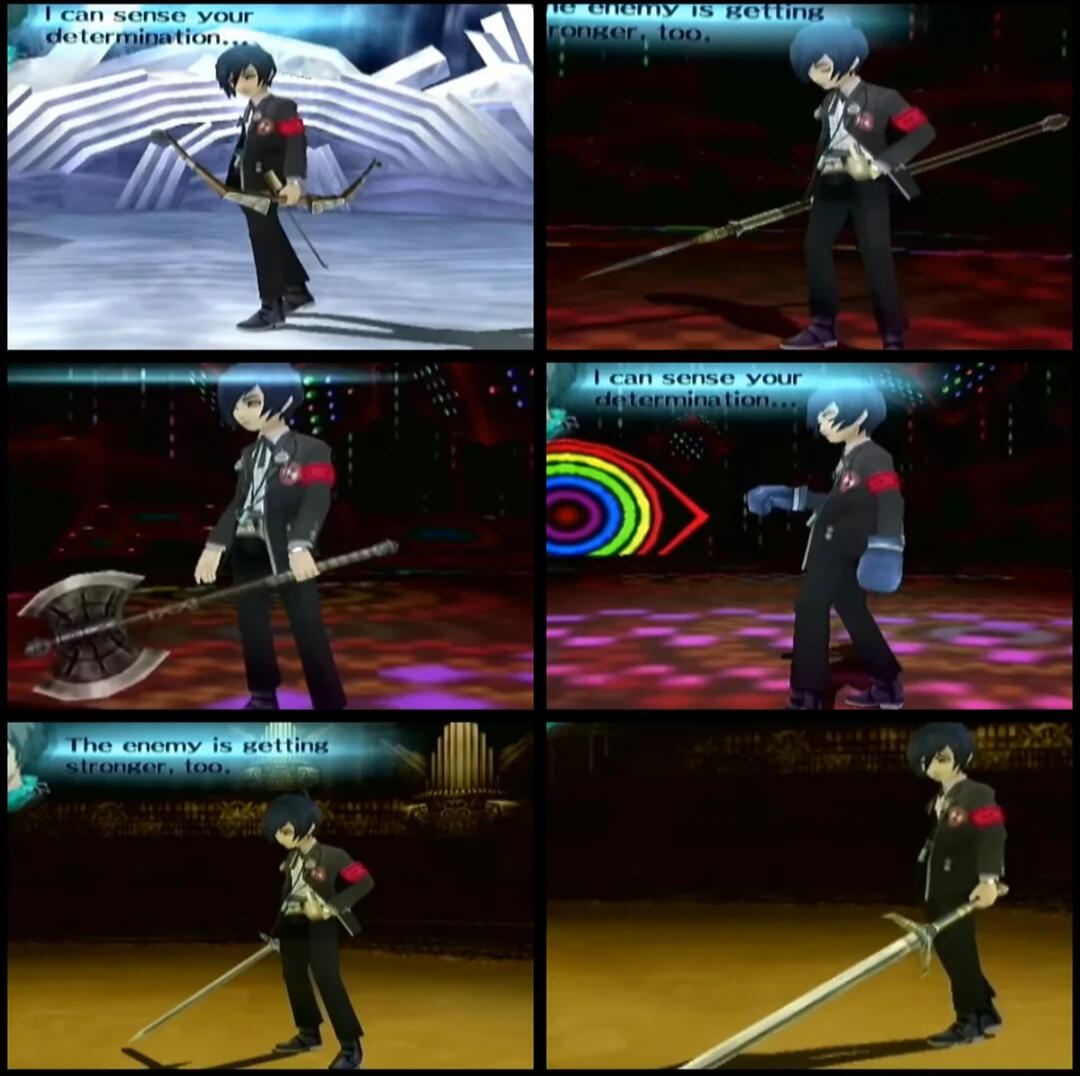
The Persona 3 protagonist is able to equip different weapons allowing for more safer or risky playstyles
Another difference is dungeon design. P3's Tartarus was made of much larger, rectangular hallways and rooms, with a slightly angled camera angle from the top. Many P4 dungeons, especially the first one, Yukiko's Castle, have long, thin hallways with small doors, and with a camera placed more directly behind the player. This provides Shadows with the opportunity to get the jump on you if you're not careful, and it's much more difficult to outmaneuver them.
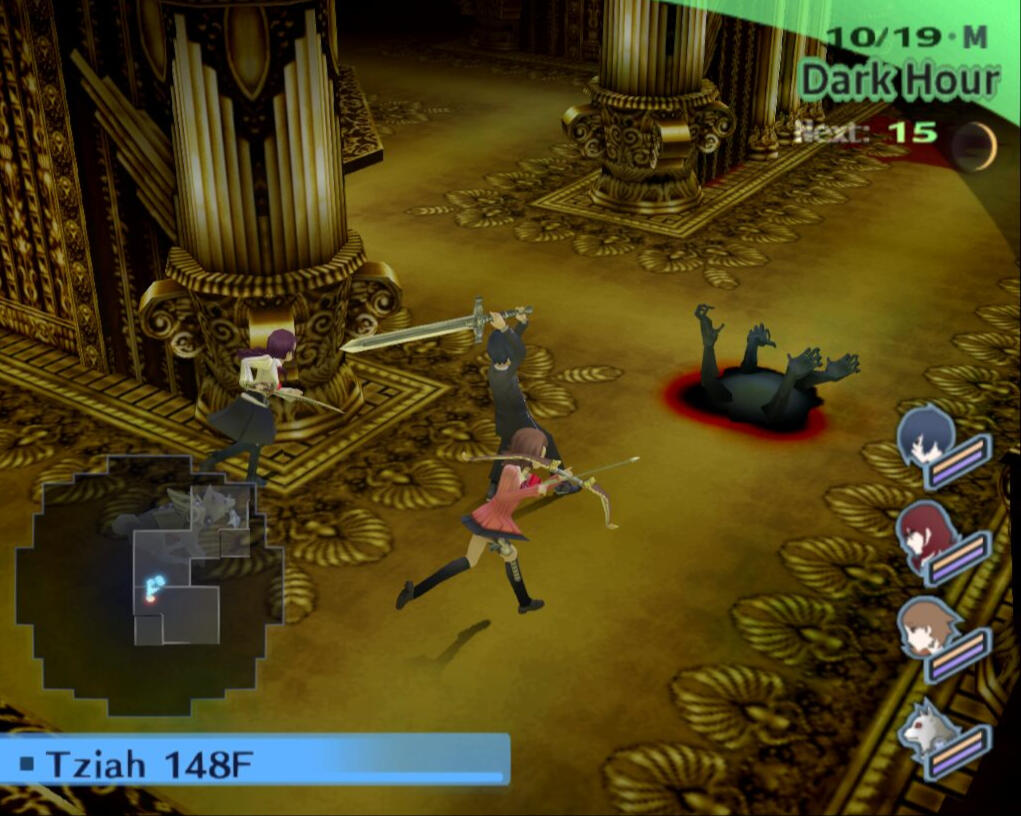
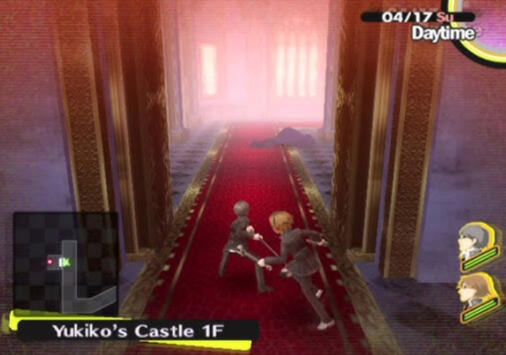
The difference in camera angles and dungeon design between P3's Tartarus and P4's Yukiko's Castle
One last aspect I'd like to touch on is enemy design. P4G was notorious for adding many enemy weaknesses, especially to enemies in Yukiko's Castle, to make the game easier (giving Shadow Yukiko herself an ice weakness, which she did not have in P4 vanilla). This applies to regular shadows as well. In P4 vanilla, many shadows in the first dungeon of the game have affinities that reflect and absorb certain elements.
These guys are extra diabolical. They reflect the protagonist's starting electric spells, Yosuke's wind, AND Chie's ice
So what's my point with all of this? Well, it makes sense that a lot of those changes were made in Golden to ease players into the first dungeon, buuut...
As a true MegaTen fan, I love the challenge. I love quite literally crawling through the dungeon at a snail's pace, making slow but steady progress, always going back to save, never knowing when I'll be ambushed. It makes it all the more sweeter when you do gain more party members and more Personas that allow you to crush obstacles that were previously run-ending. This isn't difficulty you'd ever see in a modern Atlus title, and it's not inherently a good or bad thing, but I personally do miss this level of challenge from Persona. They seem to reserve higher difficulty mostly for mainline Shin Megami Tensei these days, but damn if it isn't just as fun here. So while I'll partake in all of the other updates P4R will provide, it might not satisfy me in the same way that vanilla Persona 4 really makes me work hard to reach out for the truth.

Persona Live Series:
An Underappreciated Celebration
of Persona Music
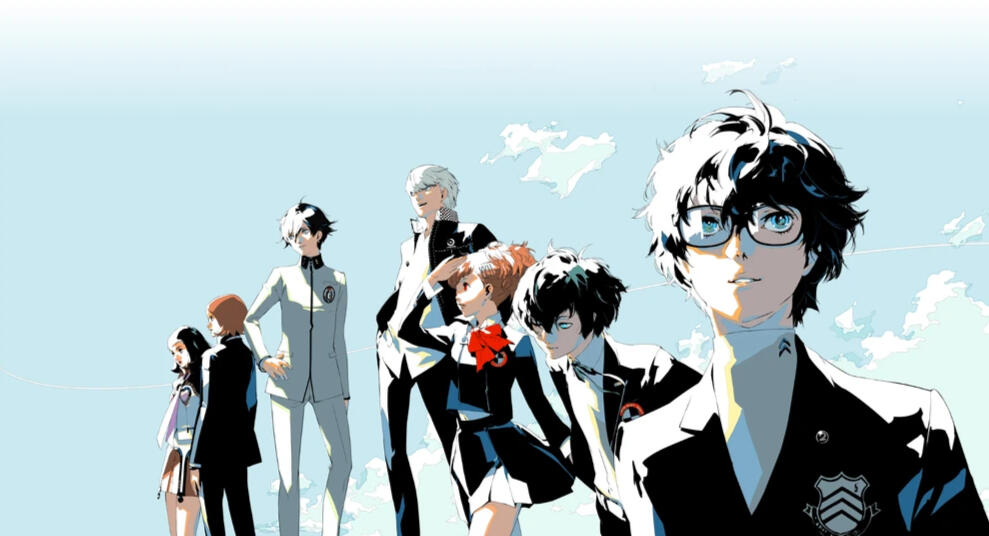
Key art for Persona Super Live 2022: Crossing Journeys
When Persona 5 hit the western gaming scene in 2017, the Persona series gained notoriety for a multitude of reasons. Its compelling coming-of-age stories and characters, its sleek and stylish user interface menus and art style, and its engaging innovations on the turn-based battle system made heads turn in a decade where Japanese role playing games were starting to fall out of favor outside of their home region.But quite possibly, one of the most famous and far-reaching aspects of Persona that has emerged in the decade that followed has been it's music. Persona's music has enraptured people across the internet, and you can't go 5 video essays on YouTube without hearing a song or two from a Persona game. It may be oversaturated, but I always get a kick knowing Shoji Meguro and others work, which was once so niche, has now moved people all over the world.However, I'm not writing to laude the work of Meguro, Atsushi Kitajoh, Ryota Kozuka, Toshiki Konishi, and all of the vocalists that made modern Persona soundtracks what they are today. There are many talented music theorists on the internet that have already done so. What I want to talk about today is how Atlus themselves celebrates the power of Persona's music; the often overlooked Persona Live series.
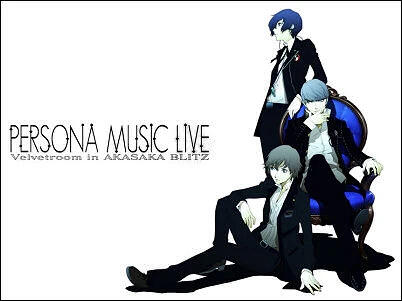
Key art for Persona Music Live 2008, featuring songs from Persona 3, Persona 3 FES,
the obscure Persona -trinity soul-, and the newly released Persona 4
For those unaware, the Persona Live series are concerts held about every other year where Persona music is performed live (hence the name) ((pretty straightforward)). The first one was held in 2008, under the name "Persona Music Live." Whether under this name, or "Super Live," "Live Tour," or some other variation, they usually keep the "Live" aspect.These aren't your typical orchestral concerts you might expect from most video game live performances; Undertale, Kirby, and Final Fantasy orchestral concerts spring to mind. This isn't to say Persona hasn't had orchestral concerts before (they have), but the Live series are more like your typical rock or idol concert, complete with a lively crowd, penlights waving in the air, and pyrotechnics. This environment suits the J-pop and J-rock soundtracks of the game quite well, and really makes the whole thing feel like a fun spectacle.
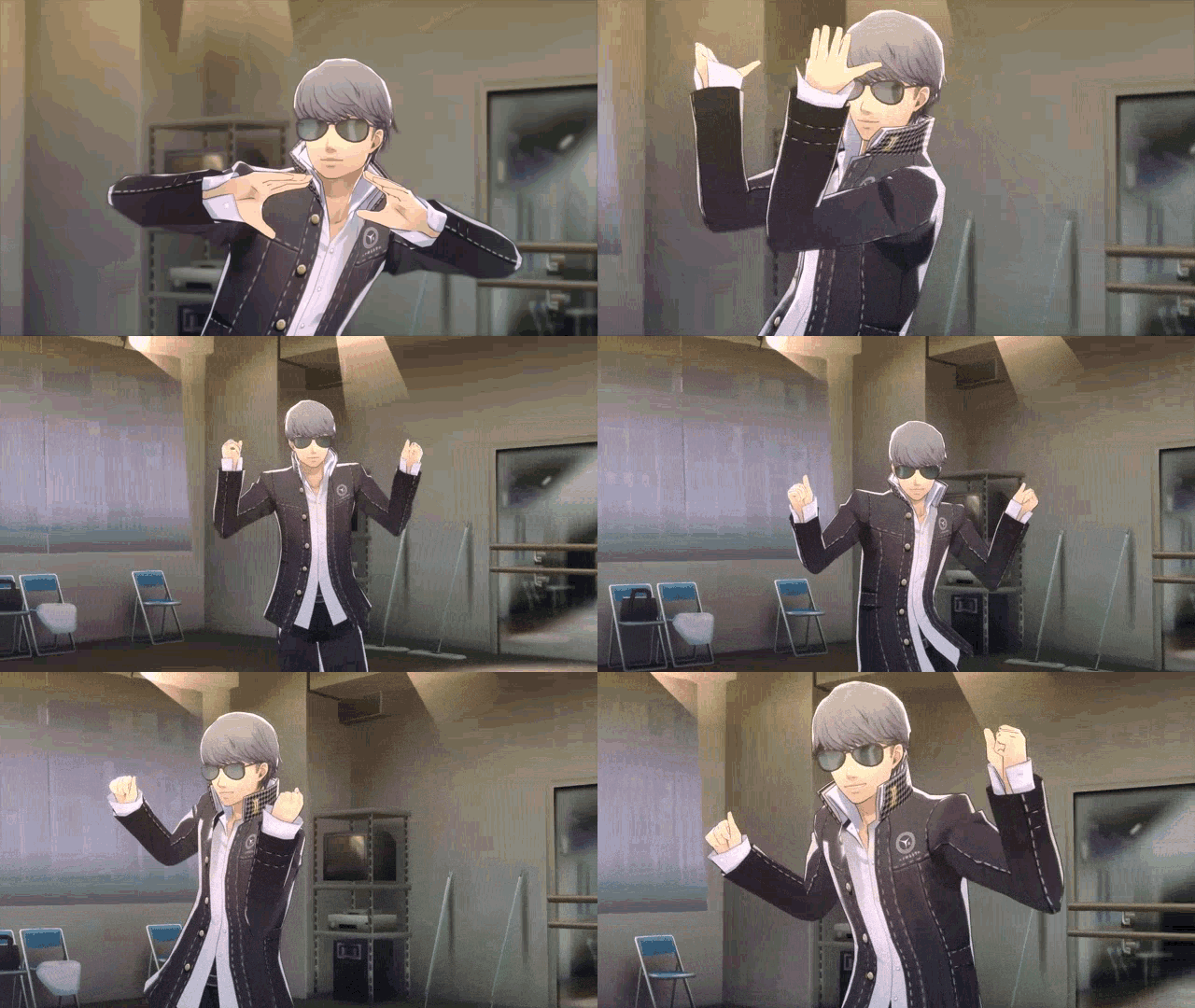
If they're gonna let the characters dance to the music, might as well let the fans too
Of course, the main vocalists from the games are present at these concerts; Lotus Juice and Yumi Kawamura for P3, Azumi Takahashi for P3R, Shihoko Hirata for P4, and Lyn for P5. Having everyone sing alongside each other, and sometimes together, really makes the live feel like a crossover celebration of each game's unique music traits.
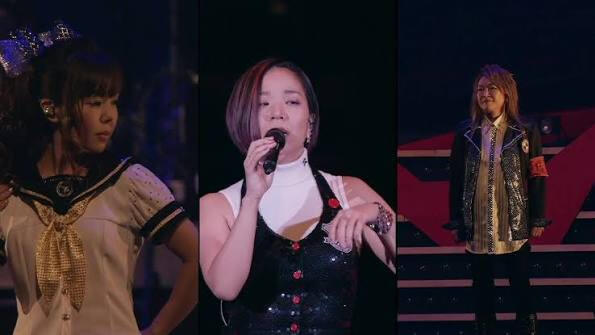
From left to right, Shihoko Hirata, Lyn, and Yumi Kawamura dressed in the Persona school uniforms as they perform at Persona Super Live P-Sound Bomb!!!! 2017
One of my favorite concerts is the one from 2019, which celebrated the Dancing games, along with Persona Q2, the crossover game. This not only allowed for all of the super energetic songs to play from the dancing games, but it also allowed for all of the singers to sing together for the crossover tracks. This isn't always the case, as some concerts are themed around specific games, so having everyone there to sing together was a really special treat.
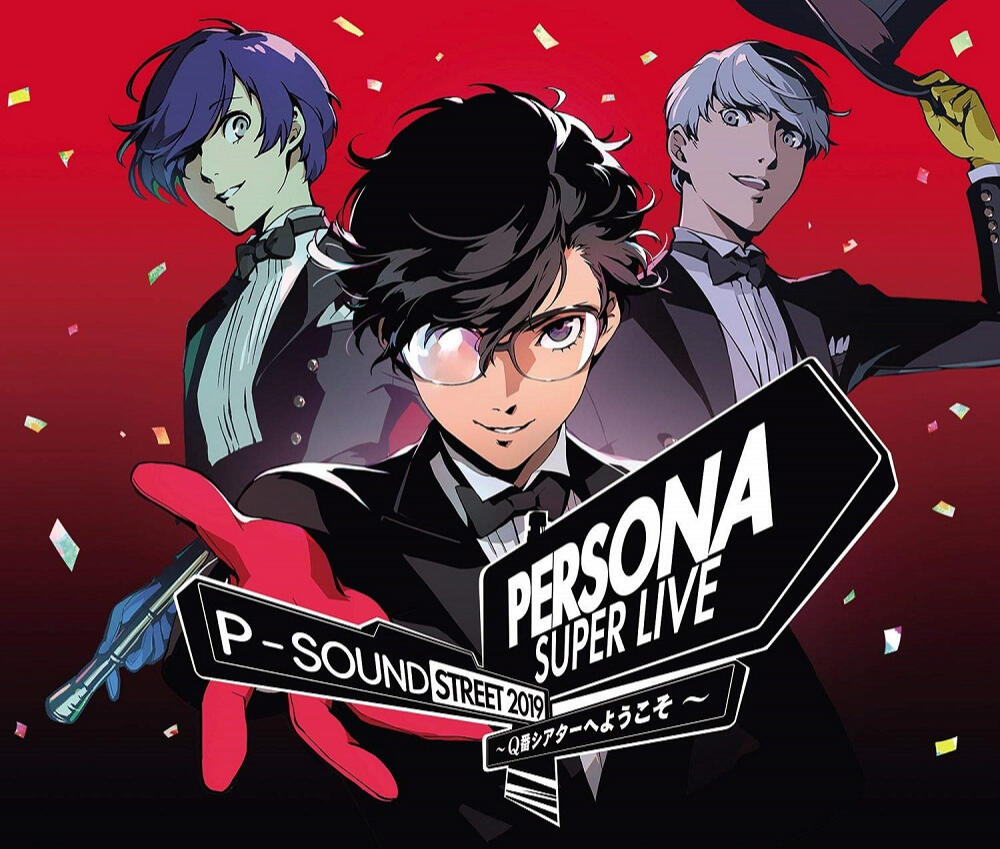
Persona Q2's ROAD LESS TAKEN from Persona Super Live P-Sound Street 2019
In addition, the composers themselves are also present to play live on stage. Meguro and Konishi shredding on guitar live is truly something to hear, and they'll usually improve or emphasize different parts of the song as they play. Typical for live performances but it really does hit harder.
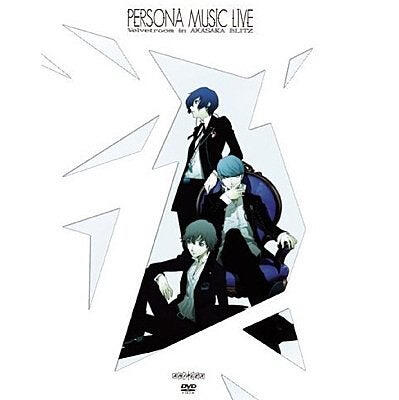
Persona 4's The Almighty as performed by Meguro from Persona Music Live -Velvet Room at Akasaka Blitz 2008
One of the most unique aspects of the Persona Live concerts is their inclusion of stage actors and dancers. It isn't just the musical performers up on stage. There's a whole cast of actors dressed as Persona characters that dance along as the performance goes on. This might seem strange (and maybe a little corny) at first, but it gives a fun air to the whole show. Many of the performers end up being the same motion capture dancers that worked on the Dancing games, and it's especially cool to see them reprise their same character roles, only on an actual stage. It's also charming to see them interact with both the singers and other cast members. Joker dancing with Lyn, or the P3 Protag letting loose a little is too charming.
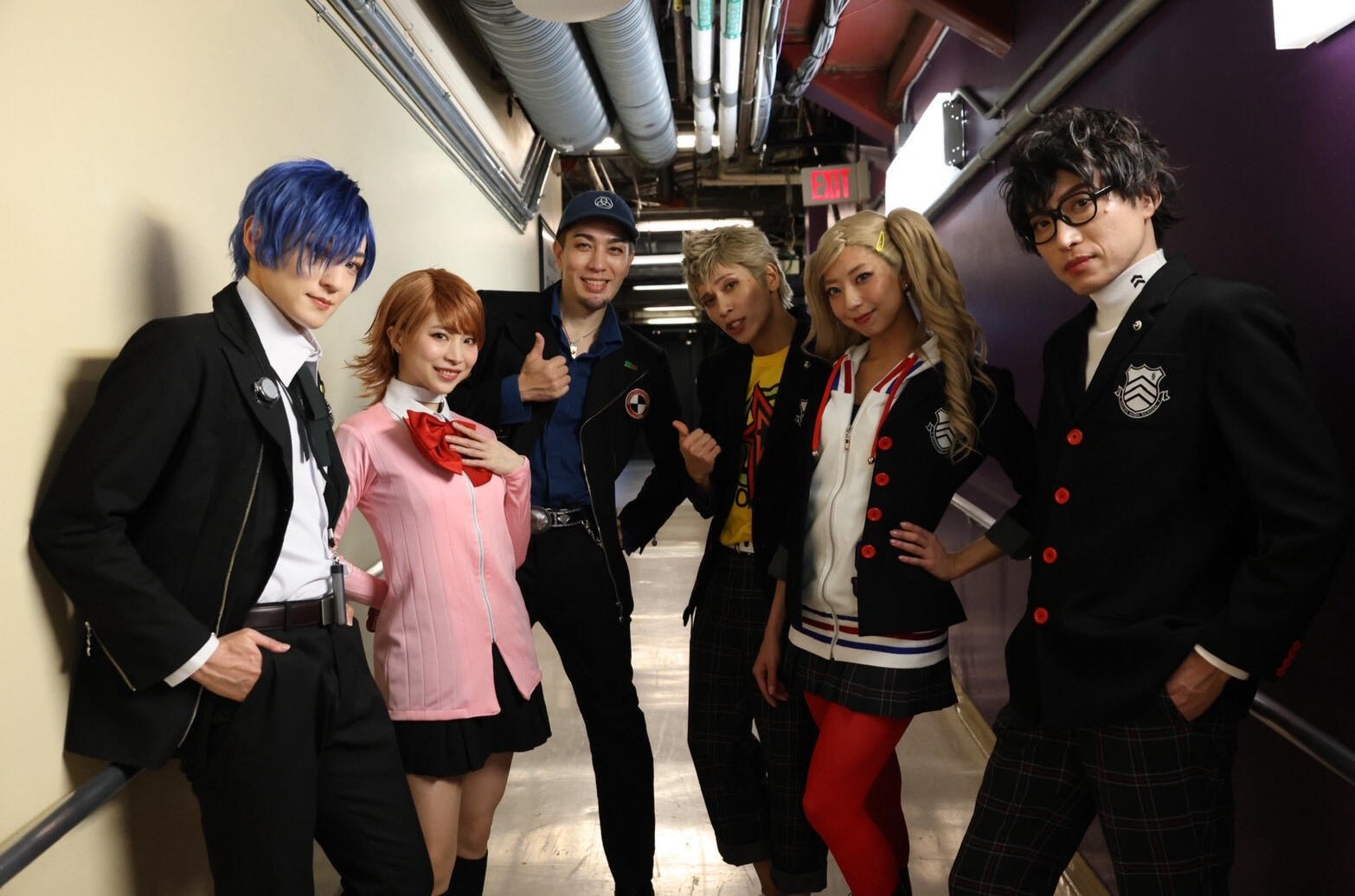
The dancing cast from Persona Live 2026: Awakenings,
many of whom reprised their roles from doing mocap for the Dancing games
These concerts are truly some of my favorite things to come out of Persona. The combination of live performances from the people who actually worked on the games and high production value really make it feel like a special celebration of what they accomplished. I've never been to one in-person, but I remember waking up at 5 AM to catch the livestreams of them, with tickets bought through websites completely in Japanese. They haven't really been advertised too much in the west, but they did hold their first concert in America at the beginning of this year, so maybe that'll change. You can find all of the performances on the usual sites if you know where to get Japanese movies and stuff like that. I'll end this post with one last thing, the performance of Rivers In the Desert from the 2017 concert, one of the most powerful performances given by Lyn. Until next time.